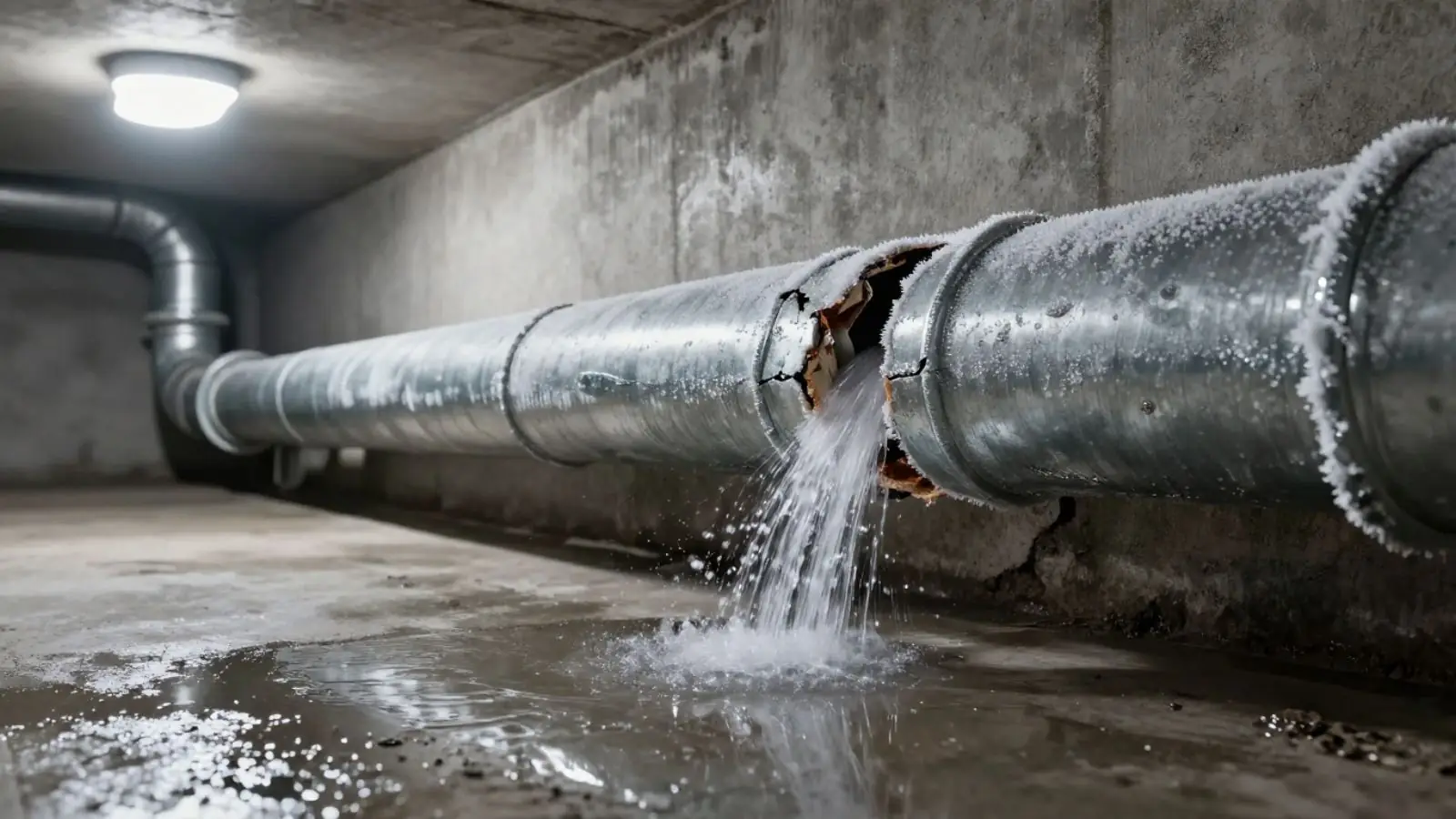
Frozen pipes only cause water damage when they split, and the water often flows only after ice melts. If you see wet walls, a stain spreading on a ceiling or low pressure after a cold night, shut off the main and call the 24/7 emergency line.
Hard freezes that split pipes are occasional here. When one hits, the damage can be large, so a calm first hour matters.
How common are frozen pipes in Duncanville?
The National Weather Service Fort Worth office reports an average of 29 freezes a season for the area, and wintry precipitation every winter. Most of those freezes are short and light, and most homes come through fine. A multi-day hard freeze is the event that splits pipes.
The 2021 winter storm was that kind of event. FEMA designated Dallas County under DR-4586 that year. It stays the benchmark, not the norm.
Why damage appears after the thaw
Ice plugs a split pipe, so nothing leaks while it is solid. When temperatures rise, the plug melts and water pours through the crack, often inside a wall or attic while you are asleep or away. That delay is why people think the freeze caused no harm.
Texas State Historical Association counts show rapid growth between 1960 and 1980, so many Duncanville homes are now 45 to 65 years old. Older pipes in exterior walls and attics can be more exposed to cold.
Signs of a split pipe
| Sign | Likely meaning |
|---|---|
| Faucet gives a trickle in cold weather | Ice is blocking a line. |
| Sudden sound of running water after a warm-up | A thawed pipe is leaking. |
| Damp or stained ceiling after the thaw | Attic or upstairs line has split. |
| Bulging paint or soft wall base | Water is inside the wall. |
Frozen pipe safety once the thaw starts
- Close the main water shutoff before the thaw finishes.
- Open faucets to relieve pressure and let water drain.
- Stay away from outlets and the panel if water is near them.
- Do not use open flames or torches to thaw a pipe.
- Call a plumber for the repair and the emergency line for the water.
The City of Duncanville utility page lists an after-hours water emergency line if you cannot reach your shutoff. Call it before water spreads further.
Pipes thawing and leaking?
Shut off the main and call the 24/7 emergency line.
How we dry out after a freeze
The crew uses moisture meters and a thermal imaging camera to find where thawed water went, since leaks inside walls and ceilings hide well. Wet vacuums and extraction units remove surface water, then air movers and LGR dehumidifiers dry cavities. Wet ceiling insulation is often removed.
The split pipe is the plumber's job. The burst itself is covered on our burst pipe cleanup page. Standards matter too, and our work follows ANSI/IICRC S500 as a published reference that you can ask any company about.
Ceilings need special care. Water collects above drywall, adds weight and can bring the whole panel down. Crews often open a small section to let trapped water out, which is safer than waiting for it to fall. Wet attic insulation holds water against framing, so it is removed and bagged.
Cost factors for freeze damage
Cost rises with the number of hours the pipe ran, how many floors it soaked and whether ceilings and insulation need removal. Drying days and equipment count matter too. No figure is given before the crew sees the space.
Insurance for freeze damage
Texas Department of Insurance guidance says to notify your agent or company promptly. Some policies set shorter windows for water damage. Sudden pipe bursts are treated differently from long-term leaks, and homeowners policies generally do not cover flood. Photograph everything and ask your insurer what applies.
The TDI Consumer Help Line is 1-800-252-3439.
Frozen pipe mistakes and prevention
- Leaving the house during a freeze without knowing where the shutoff is.
- Ignoring a trickle that could be ice in the line.
- Letting heat fall too low in vacation homes.
- Skipping an attic check after a freeze.
- Assuming no leak means no damage before the thaw.
After a winter storm in Duncanville
The National Weather Service says wintry precipitation occurs every winter, but a split-pipe freeze is occasional. A good habit is to check ceilings and walls one day after temperatures climb above 32 F.
Doing so catches slow leaks early and keeps damage smaller.
Pipes in garages, attics and exterior walls are the usual victims. Insulating them, sealing gaps where cold air enters and knowing your shutoff are small steps that matter most when the next hard freeze arrives.
Serving nearby towns after freezes
After a hard freeze, calls rise across the area. We send crews to Lancaster and to Grand Prairie, and our water damage repair work rebuilds what the water ruined.
Frequently Asked Questions
Yes. The 24/7 emergency line is open every day. We offer same-day response when available and promise no arrival time.
No. Many freeze without splitting. Damage happens when ice expands enough to crack the pipe, and the leak often starts at the thaw.
Watch for stains, bubbling paint or the sound of running water. A moisture meter and thermal camera confirm it without cutting blindly.
Only with gentle warmth like a hair dryer, and only if no wiring is wet. Never use a torch. If the pipe may be split, call a plumber.