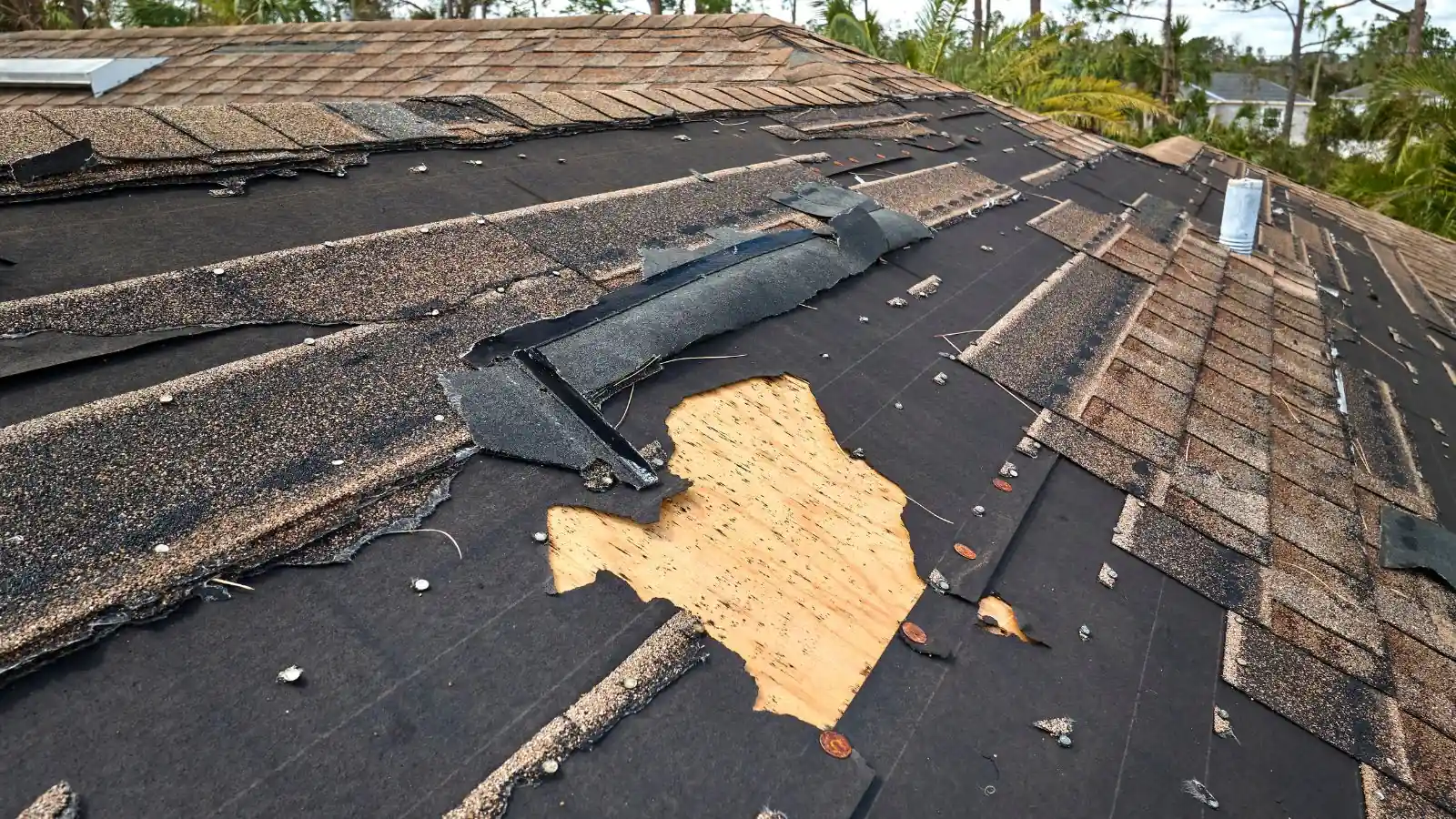
Storm water damage cleanup removes the rain that enters a building through the envelope after wind or hail: roof, flashing, windows, siding and vents. We extract standing water, open wet ceilings and walls and dry what is left.
If creeks, streets or yards are putting water into the house from outside and below, read flood damage restoration instead.
Why storms put water inside Dallas County homes
The National Weather Service Fort Worth office lists a normal annual rainfall of 37.01 inches for Dallas/Fort Worth, with spring and fall the wettest seasons. Severe weather peaks in spring, and hail and damaging winds hit somewhere in the region nearly every year.
So the practical advice is simple: check the roof and gutters in late winter, before the storm season, and call a roofer for any lifted shingles or cracked flashing.
Storm damage in Duncanville
Hail does not need to punch a hole to cause a leak. Cracked shingles and loosened seals let rain run under the surface, and the water shows up later as a stain on a ceiling several feet from the damage.
Many homes here are decades old, so older roofs, vents and window seals are common entry points. After a storm, look at ceilings and the tops of exterior walls, not just the floor.
Signs that rain got in
| Sign | What it points to |
|---|---|
| Brown ring on a ceiling | Roof leak, often away from the stain. |
| Bubbling paint near a window | Water behind siding or a failed seal. |
| Damp insulation in the attic | Opening in decking or a vent. |
| Dripping from a light fixture | Water pooling in the ceiling, treat as an electrical risk. |
| Wet carpet along an exterior wall | Water running down the wall cavity. |
Storm safety: what to do in the first hour
Before the crew arrives
- Stay out of rooms with a bulging or dripping ceiling.
- Turn off power to a wet room only if the panel is dry and safe to reach.
- Place buckets and move furniture, but do not climb on a wet roof.
- Photograph the roof, ceiling and floor for your insurer.
- Cover openings with a tarp only if you can do it from the ground.
- Call the 24/7 emergency line.
Downed lines or the smell of gas mean a call to the utility or 911 first. A roofer closes the opening in the roof. Our job begins with the water inside.
Our process: from wet ceiling to dry structure
The crew extracts standing water with wet vacuums and extraction units, then uses moisture meters and a thermal imaging camera to find wet insulation and drywall. Soaked ceiling board and insulation usually come out, because they hold water above the room.
Air movers and LGR dehumidifiers then dry the framing and floor, and we record readings in a drying log. For wider cleanup of soaked contents and debris, see water damage cleanup.
Rain coming through the ceiling?
Call the emergency line and tell dispatch which rooms are wet.
Cost factors after a storm
Cost follows the number of rooms that are wet, how long the water sat, the ceiling and insulation involved and the days of drying equipment. A roof repair is a separate cost from our work.
A figure comes only after the crew has looked at the space, and we explain the scope before we begin.
Insurance for wind, hail and rain
Texas Department of Insurance guidance says to notify your agent or company as soon as you are aware of damage. Sudden storm damage is handled differently from a long-term leak, and rising floodwater is usually excluded from homeowners policies.
Rising water is tied to flood coverage, which is a separate policy. You can look up an address on the FEMA Flood Map Service Center, and the City of Duncanville has a Floodplain Management page.
What storm cleanup does not cover
We do not patch shingles, replace windows or rebuild siding. Those belong to a roofer or exterior contractor, and temporary tarping should come from them. What we do is make sure the water that got in does not stay in.
If a ceiling is already sagging, do not poke it open yourself. A bulge can hold gallons, and a controlled opening lets the water out in one place instead of across the room.
Mistakes to avoid after a storm
- Leaving wet insulation in place because the ceiling looks dry.
- Walking on a wet or hail-damaged roof.
- Waiting weeks to tell the insurer.
- Skipping photos before cleanup starts.
- Painting over stains before the cause is repaired.
- Assuming a dry-looking attic means a dry roof deck.
We reach Cedar Hill and DeSoto too, since storms cross town lines. Our crews work with ANSI/IICRC S500 as the published reference for water damage.
Frequently Asked Questions
Yes. The 24/7 emergency line is open every day, and we offer same-day response when available. We do not promise an arrival time.
No. A roofer repairs the roof, and we handle the water inside. We tell you honestly when the roofer has to come first.
No. Rain through the roof or a window is storm water. Water rising from outside is flood, and it is handled through flood restoration.
It looks flat, dark or heavy, and it may drip. A moisture meter confirms it, and wet insulation is usually removed.