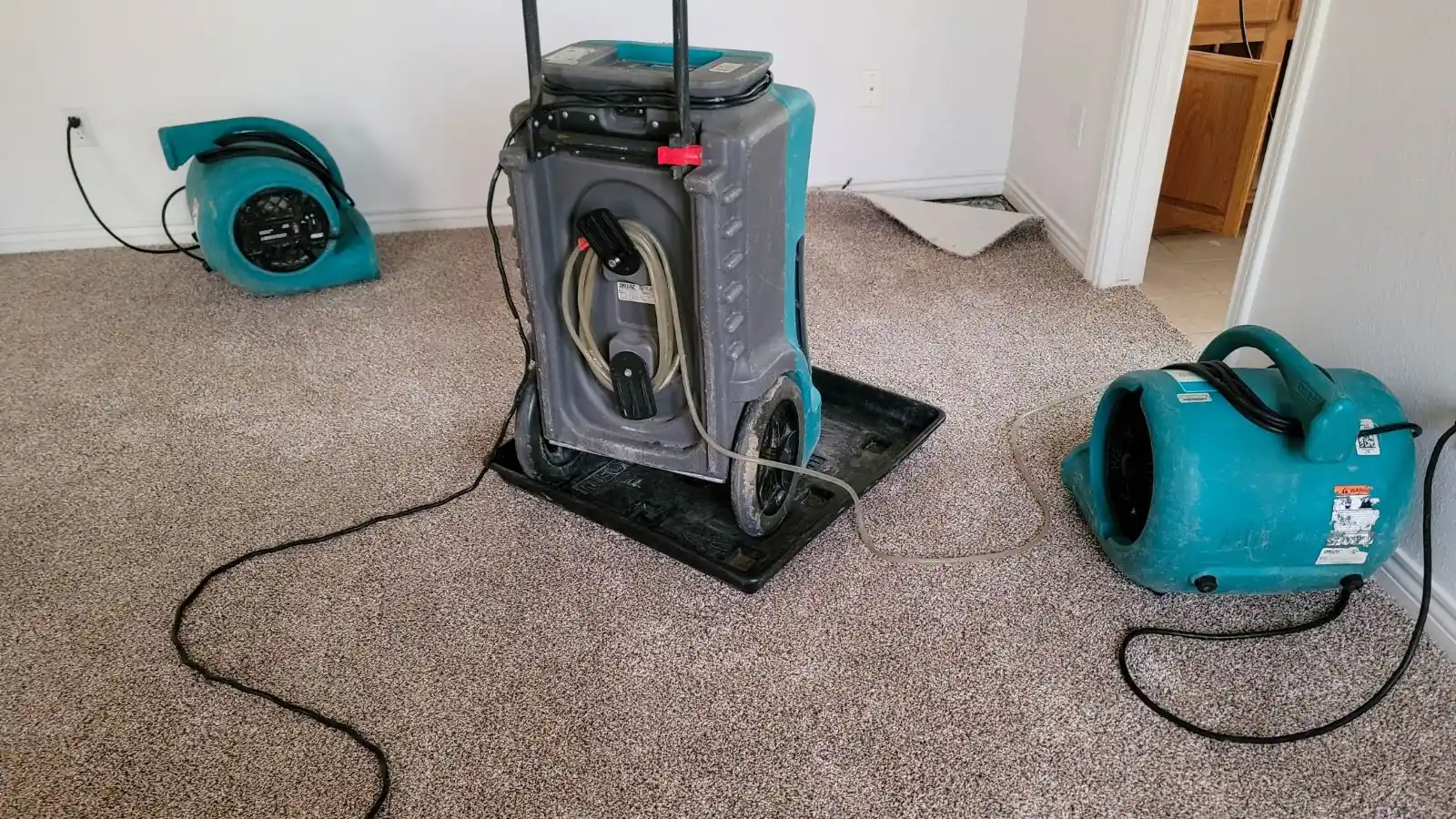
Structural drying is the work done after standing water is gone, when walls, floors and framing still hold moisture. It is not an emergency job by itself, but starting soon matters. We place equipment, take daily readings and remove it only when readings reach the drying goal.
Why drying is its own step
The National Weather Service Fort Worth office notes that Gulf moisture keeps summer humidity high and July and August highs reach the 90s and often 100 F. Humid air slows drying, so a house often needs a dehumidifier rather than open windows.
Census counts show 14,227 housing units in Duncanville in 2020, and Texas State Historical Association records show many homes date from the 1960s and 1970s. Older framing and layered finishes can hold water, so readings matter.
The equipment and what it does
| Tool | Job |
|---|---|
| Air movers | Push air across wet surfaces to speed evaporation. |
| LGR dehumidifiers | Pull moisture from the air so surfaces keep releasing water. |
| Moisture meters | Show moisture inside drywall, wood and subfloor. |
| Thermal imaging cameras | Reveal cold, wet areas behind finishes. |
Dry air matters as much as moving air. Air movers lift water off a surface, and that water goes into the room as vapor. LGR dehumidifiers, short for low grain refrigerant units, pull that vapor out so it does not settle back into drywall, carpet or wood. Without both, a room can feel dry to the touch while the material inside is still wet.
Signs that drying is still needed
- Walls feel cool or damp days after cleanup.
- Baseboards cup or paint bubbles.
- A musty smell lingers.
- The room feels humid with windows closed.
Surface checks fool people. Paint can look fine over wet gypsum, and a hardwood floor may feel solid with a damp subfloor beneath it. A thermal imaging camera shows temperature differences that often point to moisture, and the moisture meter then confirms the reading on the material itself.
Safety around drying equipment
Keep cords dry and out of walkways. Do not move equipment yourself. Equipment runs on household power, so do not overload one circuit. Keep children and pets from the machines.
Safe habits around drying equipment
- Keep power cords dry, off wet floors and out of walkways.
- Leave equipment where the crew placed it, because moving it changes the airflow.
- Keep children and pets away from running machines.
- Do not plug machines into overloaded outlets or extension cords.
- Call the line if a machine sparks, smells hot or trips a breaker.
Walls still damp?
Call us and ask about a moisture check and drying plan.
How a drying job runs
Map the moisture
Meters and a thermal imaging camera show the wet area.
Set the equipment
Air movers and LGR dehumidifiers go where readings call for them.
Read daily
The crew records readings in a drying log each visit.
Remove equipment
Machines come off once readings meet the drying goal.
Each visit, the crew measures the same spots, notes the room temperature and humidity, and writes the numbers in the drying log. That record shows a flat line or a falling line, and it tells the crew to move a machine, add one or take one away. Daily readings also catch a wall cavity that is drying slower than the room.
The drying goal is set from readings in dry parts of the home, so it fits your house. Daily readings show whether walls are trending down, and the crew adjusts machines as needed. This work is the heart of water mitigation, and rebuilding falls under water damage repair.
Cost factors for structural drying
Cost depends on the area wet, the materials involved, how many machines run, and how many days readings need. The figure comes after the crew sees the space. A published reference such as ANSI/IICRC S500 can be asked about by any customer.
Rooms that need drying are often kept closed so conditioned air stays where the machines can use it. The crew will ask you to leave doors shut, keep equipment plugged in, and call if a unit stops or alarms. Noise is real, and the run time is usually a few days, not a few hours.
Insurance and drying records
Texas Department of Insurance guidance says to notify your insurer promptly. Drying logs and photos help show what was done. Check your policy, and call the TDI Consumer Help Line at 1-800-252-3439 with questions.
Mistakes to avoid when drying
- Opening windows on a humid day.
- Pulling equipment before readings are in range.
- Closing walls on wet framing.
- Using a household fan in place of a dehumidifier.
Drying help in Lancaster and DeSoto
Crews also work in Lancaster and DeSoto, where the same summer humidity slows drying.
Frequently Asked Questions
This page covers non-emergency drying, but the 24/7 emergency line is open every day if water is still spreading. We offer same-day response when available and promise no arrival time.
It depends on the materials and the amount of water. Daily readings show progress, and the crew removes equipment when readings reach the goal.
Readings show whether the equipment is working. They also tell the crew when to move or remove machines.
Equipment comes off when readings in the affected materials reach the drying goal, which the crew sets from dry reference spots in your home. The final readings are recorded in the drying log before machines are removed.
Fans move air but do not remove moisture from it. A dehumidifier is needed in humid weather.