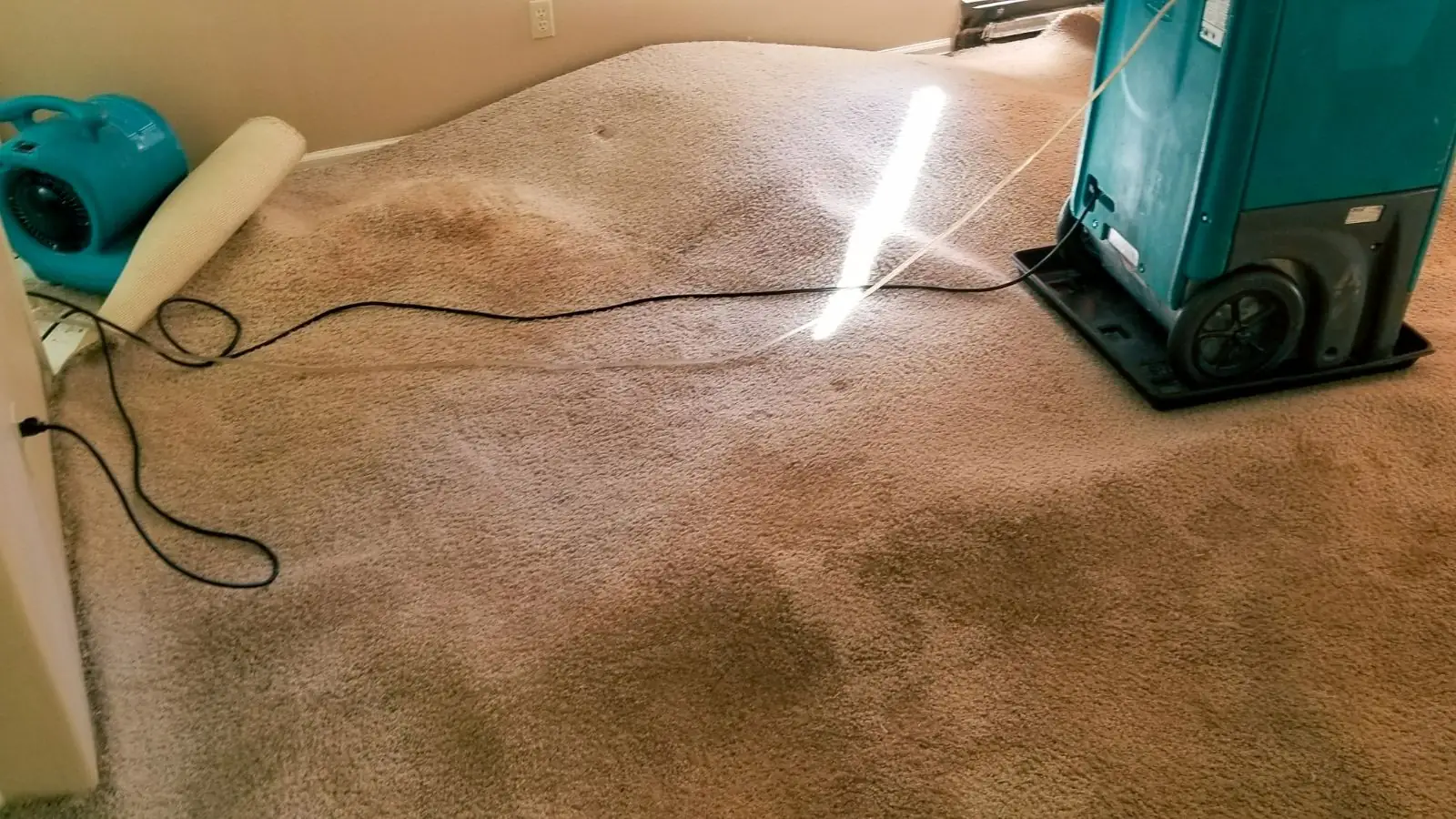
Wet carpet can often be saved if the water was clean and the drying starts within about a day or two. If the water was dirty or sat for days, the pad is usually replaced and the carpet may be too. A moisture meter gives the answer, not the surface feel.
This page is for non-emergency jobs. If water is spreading, use the 24/7 emergency line.
Why carpet dries slowly in North Texas
The National Weather Service Fort Worth office notes that Gulf moisture keeps summer humidity high, so wet materials dry slowly when the air is already damp. That is why we use dehumidifiers instead of leaving windows open.
Texas State Historical Association growth data show most of Duncanville's population arrived between 1960 and 1980, so many homes have older carpet and pad. Older pad breaks down faster when wet.
Rain and wet carpet in Duncanville
The National Weather Service gives Dallas/Fort Worth a normal 37.01 inches of rain a year, with spring and fall the wettest. Heavy rain is a common way for water to seep along exterior walls into carpet.
After a rainy week, check carpet along outside walls and in closets. Press a dry paper towel on it for ten seconds. If it comes up damp, call before the pad stays wet longer.
Save or replace: the decision
| Water type | Time wet | Usual decision |
|---|---|---|
| Clean (supply line, rain) | Under 24 to 48 hours | Carpet saved, pad often saved. |
| Clean | Several days | Pad replaced, carpet depends. |
| Gray (dishwasher, washer) | Any | Pad replaced, carpet cleaned or replaced. |
| Black (sewage, outside flood) | Any | Carpet and pad removed. |
ANSI/IICRC S500 is the published reference for these categories.
Pad holds the most water and is the cheapest layer to replace. Carpet fibers dry faster than the pad underneath.
Time matters because carpet pad starts to break down and smell as it stays wet. Water that began as clean can pick up dirt from the floor and move into a worse category. That is why we ask when the water started before we say what can be saved.
Safety before you touch wet carpet
Stop the source. Turn off power to wet areas if the panel is dry and you can reach it safely. Keep children and pets off wet carpet if the water may be dirty.
Do not run a household vacuum on wet carpet. Use a wet vacuum only and stay away from outlets.
How we dry carpet
Extract
Extraction wands pull water out of the carpet and pad.
Lift
The edge comes off the tack strips so the pad can be removed or dried.
Check
Moisture meters read the subfloor under the pad.
Dry
Air movers and LGR dehumidifiers run until readings match dry areas.
Extraction comes first because wands remove far more water than fans can evaporate. Air movers then go on to dry what remains. Tack strips are checked since they can rot or rust when wet.
For the broader cleanup around the floor, see water damage cleanup. For equipment details, see structural drying and dehumidification.
Subfloor matters as much as the carpet. Plywood or concrete under the pad can stay wet after the top layers are gone, so we read it with the meter and keep air movers on until it matches dry areas.
Carpet squishing underfoot?
Call us and describe how long it has been wet.
Carpet, pad and tack strips: what each layer does
The carpet is the surface, the pad is the cushion and the tack strips are the thin wood strips that hold the edges down. When water gets under the carpet, all three can be affected, and each has its own fate.
Carpet is stretched back onto strips after drying if it is kept. Strips that stayed wet can rot or loosen, so we check them before the carpet goes back. If the carpet is replaced, new strips are the usual choice.
Cost factors for wet carpet
Cost depends on the area, the water category, how many layers must be pulled, the days of drying and whether the subfloor needs work. A figure comes after the crew sees the room.
Replacing only pad costs less than replacing carpet and pad, which is why the meter readings matter.
Insurance for wet carpet
Texas Department of Insurance guidance says to notify your agent or company as soon as you are aware of damage. Homeowners policies generally do not cover flood, while sudden plumbing failures are often handled differently.
Check your policy. Keep a sample of the pad and photos of the wet area.
Mistakes to avoid with wet carpet
- Putting a fan on it and leaving the pad wet underneath.
- Waiting a week to see if it dries.
- Walking on it, which spreads water.
- Replacing carpet before the subfloor is dry.
- Reusing old tack strips that stayed wet.
We reach DeSoto and Cedar Hill with the same method.
Frequently Asked Questions
This page is for non-emergency jobs, but the 24/7 emergency line is open every day if water is spreading. We offer same-day response when available and do not promise an arrival time.
Often yes if the water was clean and drying started quickly. We test with a moisture meter before deciding.
Pad acts like a sponge and can stay wet long after the top feels dry. It is a lower-cost layer to replace.
Usually a few days, depending on humidity and thickness. Readings show when it is done.