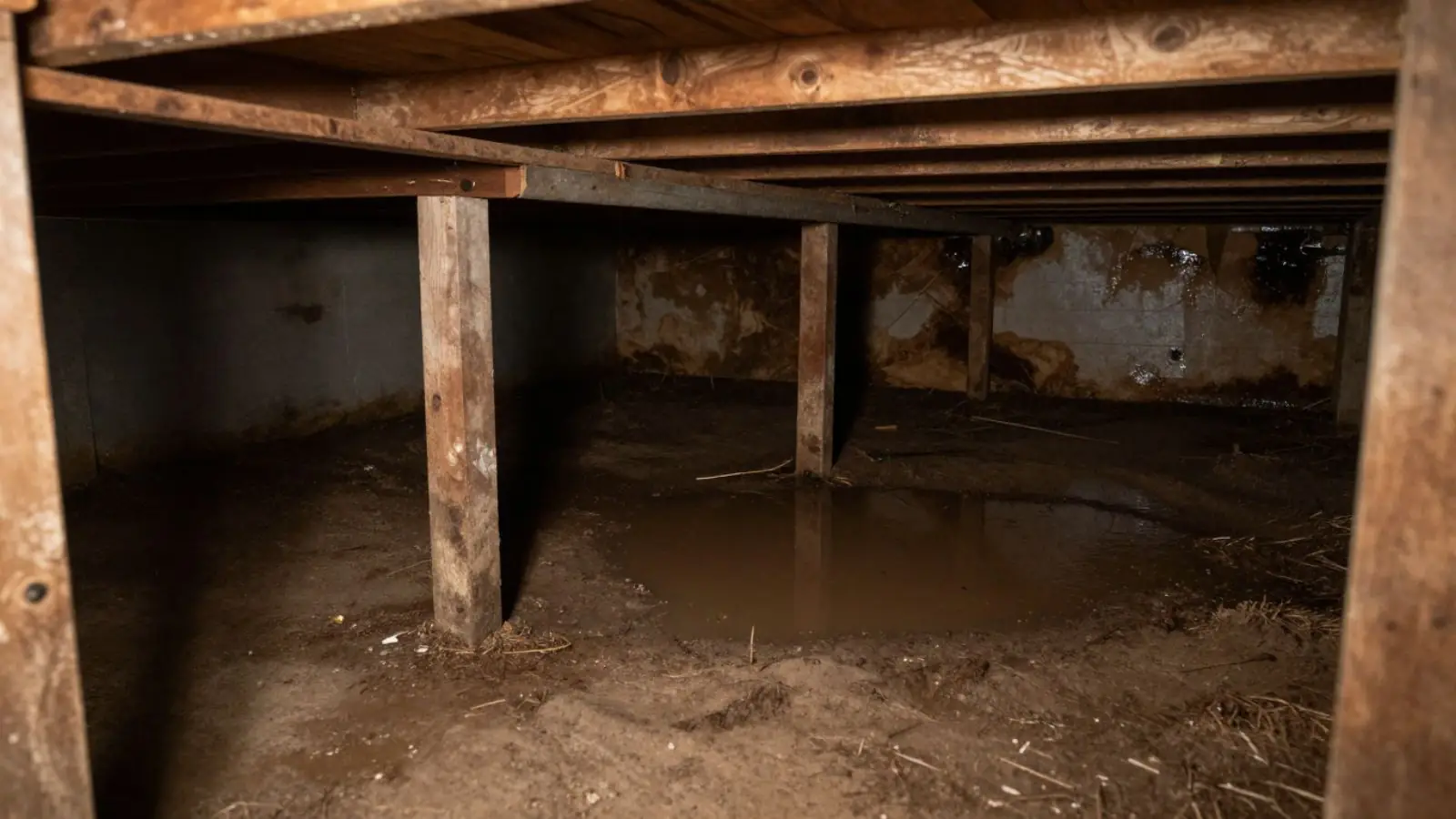
If your home sits on piers with open space beneath the floor, standing water in that crawl space can soak the floor framing and insulation. We pump the water out and dry the joists and subfloor. Texas slab homes do not have crawl spaces, and we make no claim on how many local homes have one.
Crawl spaces and who has one
A crawl space is the shallow gap between the ground and the floor of a pier and beam house. A slab-on-grade home sits directly on concrete and has none. Duncanville Census counts list 14,227 housing units in 2020, but they do not tell us foundation type, so check your own home's foundation.
How water gets under the house
The National Weather Service Fort Worth office puts Dallas/Fort Worth normal rainfall at 37.01 inches a year, with spring and fall usually wettest. Heavy storms can send water toward foundations when the ground cannot absorb it. A low yard, clogged gutter or failed downspout can aim that water under a pier and beam floor.
Plumbing is another source, since supply and drain lines run through the crawl space. A leak there can go unseen for weeks. Check your drains and gutters after storms.
The ground under a pier and beam house is often bare soil, and wet soil gives off moisture for days even after the standing water is gone. Vapor rises into the floor framing and the insulation tucked between the joists. That is why pumping is only the first step and drying the wood is the longer one.
Signs and what they mean
| What you notice | What may be happening |
|---|---|
| Soft or springy floor | Subfloor or joists have been wet. |
| Musty odor from vents or floor | Damp insulation or wet soil below. |
| Visible standing water at the vent opening | Water has collected under the house. |
| Sagging insulation hanging down | Insulation has absorbed water. |
Safety before anyone enters
Do not crawl under the house if you see water near wiring or ductwork. Shut off power to that area at the panel only if the panel is dry. Turn off the main water if a pipe is leaking, and call the City of Duncanville at (972) 780-4959 for after-hours water emergencies.
Water under the house?
Call the 24/7 emergency line before you go under the floor.
Our process for crawl space water
Submersible pumps and wet vacuums take out standing water. Wet insulation and debris get removed, then moisture meters and a thermal imaging camera show how far the water climbed into the framing. Air movers and LGR dehumidifiers dry the joists and subfloor, with readings noted in a drying log.
If surfaces stay damp, mold can grow. Texas Occupations Code Chapter 1958 is run by the Texas Department of Licensing and Regulation, and licensed assessors and remediators are separate. See our mold remediation page, and ask any company for its TDLR license number.
Wood framing is dried to a goal that the crew sets from readings in dry parts of the same house. Joists and subfloor boards are checked with a moisture meter at several spots, and the numbers go in the drying log. If a section stays wet, the crew may open a small area of flooring above so air can reach the subfloor from inside the home.
Cost factors for crawl space water
Cost depends on water depth, how hard the space is to reach, how much insulation must come out, the area of subfloor to dry, and how many days of equipment are needed. The figure comes after the crew sees the space. A plumber or foundation contractor prices any repair.
Flood, plumbing and insurance
Texas Department of Insurance guidance says homeowners policies generally do not cover flood damage, while a sudden plumbing leak may be treated differently. Notify your insurer promptly and check your policy. The TDI Consumer Help Line is 1-800-252-3439.
Crawl space mistakes and prevention
- Closing vents with water still inside.
- Running a fan from the house and leaving the soil wet.
- Skipping gutter and downspout checks before storm season.
- Ignoring a musty smell for weeks.
Floodplain checks for Duncanville
The City of Duncanville has a stormwater management plan and a Floodplain Management page, and it names no flood zones. Use the FEMA Flood Map Service Center and search your address to see if you are mapped.
We also serve Lancaster and DeSoto when a crawl space needs pumping. Long drying jobs follow structural drying practice, and ANSI/IICRC S500 is a published standard you can ask about.
Frequently Asked Questions
Yes. The 24/7 emergency line is open every day, with same-day response when available and no promised arrival time. Only pier and beam homes have crawl spaces.
No. Slab-on-grade homes sit on concrete, so this page does not apply. Our other pages cover slab floors.
Yes, when the space is reachable. Submersible pumps move the water, then drying follows.
No. A foundation or drainage contractor handles that. We dry the water damage, and we tell you honestly when another trade has to come first.
Look at the vent openings and, if it is safe, use a flashlight from outside. Standing water, wet soil or sagging insulation are clear signs. A musty smell or a soft floor inside can also point to it.